13x20x4 Air Filter for Allergy Sufferers: What to Look For
Walk into a Wellington home in late April and you can almost see the pollen. That yellow film on the dashboard. The gritty feel on the kitchen counter you wiped yesterday. It's making it indoors, and most of what gets airborne keeps cycling through your HVAC system on roughly a six-minute loop. The 13x20x4 filter in your return is the only thing standing between those particles and your family's lungs.
If your home feels like it's fighting against your allergies, that filter is the first place I look when neighbors call me. After years of working on systems in this community, and with manufacturing experience from the team at Filterbuy's 13x20x4 air filter line, I can tell you the size you've got is one of the most overlooked variables in allergy relief at home. The wrong filter keeps recirculating what your nose has been fighting since breakfast. The right one quietly hands the house back.
Here's what to look for in an air conditioner filter 13x20x4 when allergies are the reason you're shopping, and what to skip past no matter how loud the marketing gets.
TL;DR Quick Answers
13x20x4 Air Filters
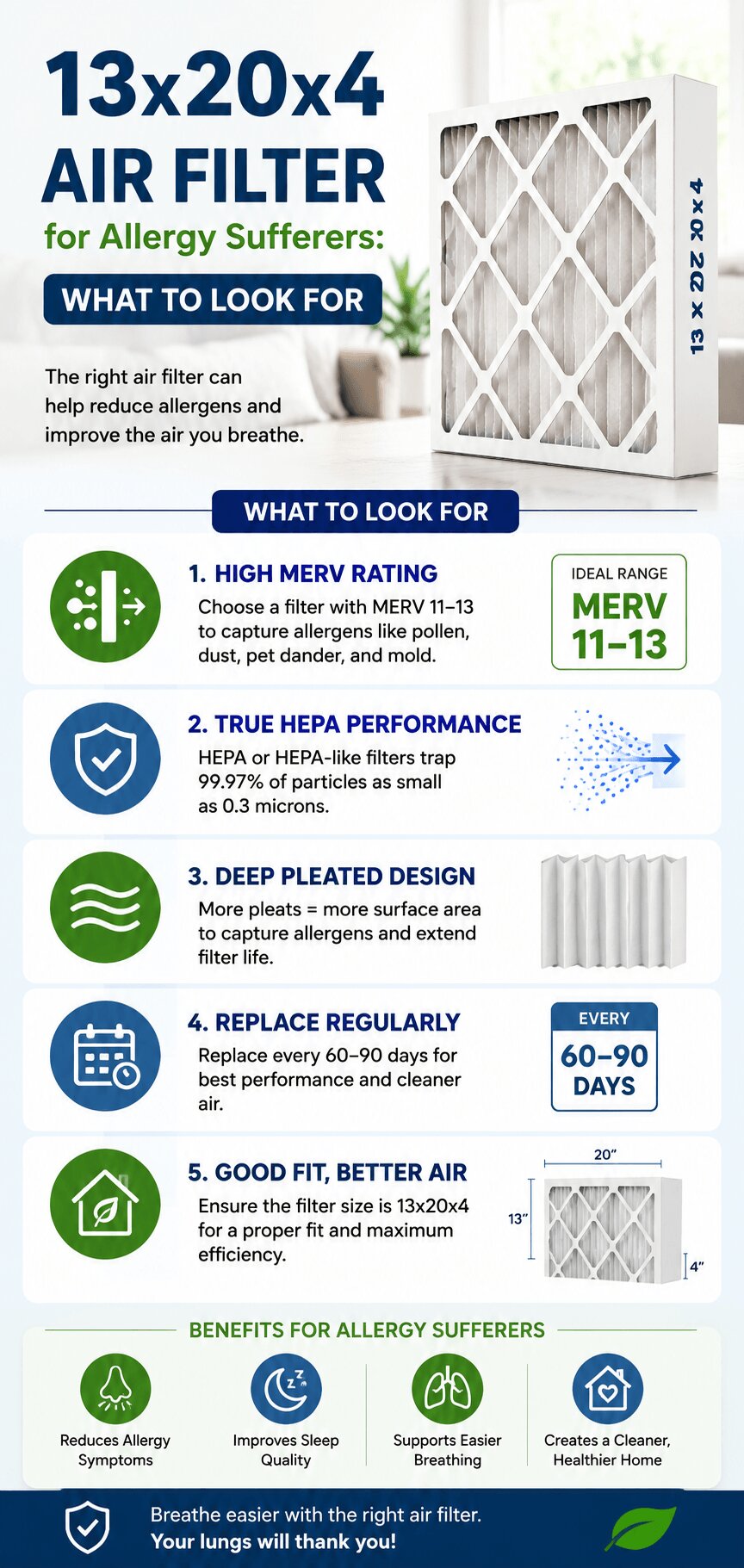
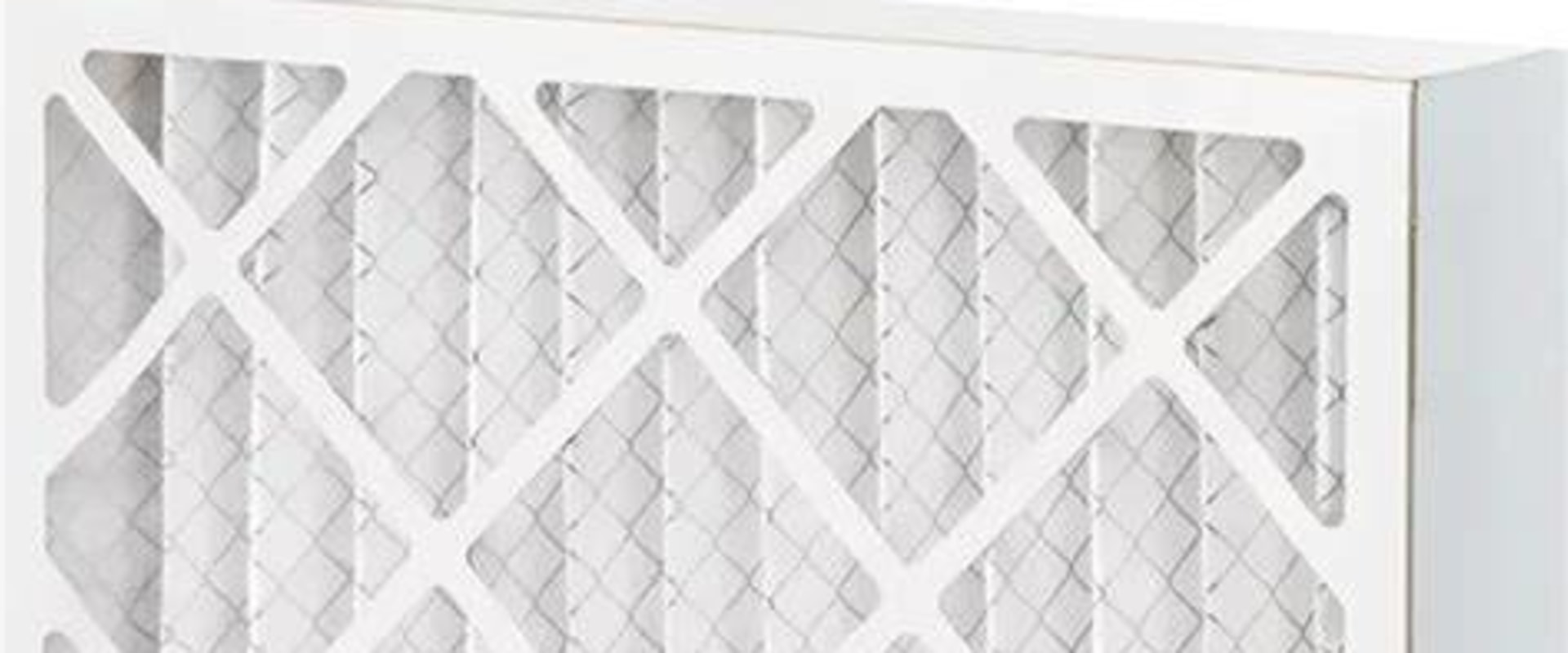
A 13x20x4 air filter is a 4-inch deep pleated HVAC filter that fits return-air grilles and air handlers built for 4-inch media. The actual size measures roughly 12.5" x 19.5" x 3.75". The 13x20x4 label is the nominal size, rounded up. From years of working with this size in Wellington homes and from Filterbuy's manufacturing side, here's the short version:
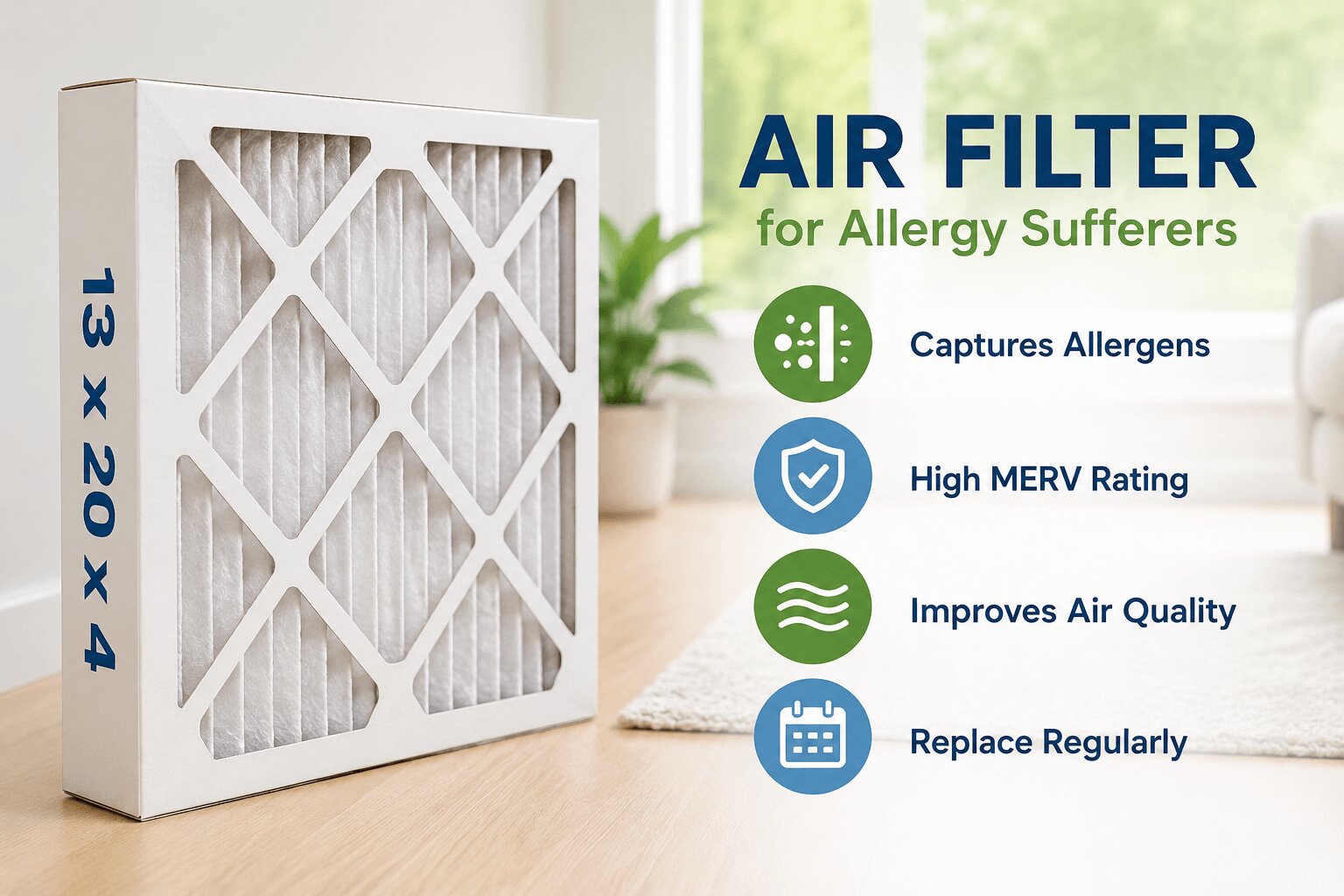
Available in MERV 8, MERV 11, and MERV 13. MERV 11 and MERV 13 are the right call for allergy and asthma households.
Holds about four times the media surface area of a standard 1-inch filter, capturing more allergens without straining airflow.
Change every 90 days for most homes, every 6 weeks with allergies or asthma, every 2 months with pets.
An uncommon size in big-box retail. Most homeowners order direct from a U.S. manufacturer like Filterbuy to skip the empty shelves and get the MERV they actually want.
Top Takeaways
For allergy households, MERV 11 to MERV 13 is the practical sweet spot in a 13x20x4 air filter.
Skip MERV 8 if your concerns go beyond basic dust and lint.
True HEPA usually doesn't belong in residential HVAC. Pair MERV 13 with a portable HEPA in the bedroom instead.
Washable filters trade allergy performance for reusability. Not the right call if symptoms are why you're shopping.
Change a 4-inch allergy-grade filter every 3 to 6 months in our climate. Filterbuy recommends every 6 weeks for asthma and allergy households.
Installation takes five minutes. Arrow toward the air handler, system off, date written on the edge in marker.
Why the 13x20x4 Size Matters More for Allergy Sufferers
A 4-inch deep pleated filter carries roughly four times the media surface area of a standard 1-inch filter. More surface, more pleats, more places for pollen and dander to land. The system can pull air through that depth without straining the blower the way a thin, high-MERV filter often does. In our South Florida climate, with year-round pollen and humidity that lets mold spores hitchhike on every cubic foot of air, that depth earns its keep.
The MERV Rating That Actually Helps Allergies
MERV (Minimum Efficiency Reporting Value) is a 1–16 scale rating how well a filter captures airborne particles. The background on filter media and capture mechanisms is worth a read if you want it. Here's the practical version for allergy households.
A 13x20x4 air filter MERV 8 handles dust and lint well. It lets a lot of pollen and dander pass.
MERV 11 captures about 65% of particles in the 1–3 micron range, which is the size that triggers most allergy symptoms.
MERV 13 is the sweet spot for serious allergy and asthma households. It captures 90%+ of larger allergens and up to 85% of fine particles.
Climbing above MERV 13 in an older residential system can restrict airflow enough to strain the blower. Match the filter to the system you actually own.
HEPA, Electrostatic, or Washable: Honest Notes
This is where most allergy buyers get steered wrong, so I'll be direct with you.
Pleated disposable filters at MERV 11 to MERV 13 are the workhorse choice for whole-home allergy relief. Most homeowners I talk to are best served right here.
A 13x20x4 electrostatic air filter can perform well on smaller particles. Verify the MERV equivalence on the label rather than trusting the marketing copy on the box.
A true 13x20x4 HEPA filter rarely belongs in residential HVAC. HEPA media restricts airflow too much for most home blowers. For HEPA-grade filtration, pair a MERV 13 in the return with a standalone HEPA purifier in the bedroom.
The best washable air filter 13x20x4 is still rarely the best allergy filter. Most washable media tops out around MERV 4 to MERV 6. That's not enough when symptoms are what brought you here.
Features to Look For Beyond MERV
Actual size around 12.5" x 19.5" x 3.75". The nominal size is rounded up.
Sturdy beverage-board or metal-reinforced frame. Sagging frames let air bypass the media entirely, which means everything you paid for goes to waste.
Synthetic media. It holds up better than paper in our humidity.
USA manufacturing and a clear MERV test method printed on the label.
How to Install a 13x20x4 Air Filter
Locate the filter slot. It's usually behind a return-air grille on a wall or ceiling, or in the air handler closet.
Look at the airflow arrow on the old filter before you pull it out.
Slide the new filter in with the arrow pointing toward the air handler (away from the room).
Close the panel, write the install date on the filter edge in marker, and turn the system back on.
How Often Allergy Households Should Change It
For most allergy homes in Wellington, every 4 to 6 months works well. With pets, active pollen season, or wildfire smoke drifting our way, lean toward every 3 months. Filterbuy actually recommends every 6 weeks if someone in the home has asthma or allergies, and that matches what I've seen in real homes. A 4-inch filter that's still pulling on its second summer is doing more harm than good.
"After years of working on systems in Wellington homes, the single change with the biggest payoff for an allergy household is swapping a MERV 8 for a quality MERV 11 or MERV 13 in the 4-inch slot they already have. I've watched neighbors here spend hundreds on portable purifiers when the filter sitting in their return was the actual problem."
- Filterbuy HVAC Solutions, South Florida Service Team
7 Essential Resources
If you want to read further before making a decision, these are the sources I trust and use to back up what I recommend in homes:
EPA Guide to Air Cleaners in the Home: https://www.epa.gov/indoor-air-quality-iaq/guide-air-cleaners-home. The federal baseline on filter performance, MERV ratings, and what air cleaners actually do.
EPA Air Cleaners and Air Filters in the Home: https://www.epa.gov/indoor-air-quality-iaq/air-cleaners-and-air-filters-home. Covers HVAC filter upgrades and pairing them with portable air cleaners.
EPA, The Inside Story: A Guide to Indoor Air Quality: https://www.epa.gov/indoor-air-quality-iaq/inside-story-guide-indoor-air-quality. The EPA and CPSC consumer handbook on what's actually in your indoor air.
AAFA Allergy Facts and Figures: https://aafa.org/allergies/allergy-facts/. The Asthma and Allergy Foundation of America's national prevalence data, updated annually.
AAFA 2026 Allergy Capitals Report: https://aafa.org/wp-content/uploads/2026/03/aafa-2026-allergy-capitals-report.pdf. Annual ranking of the most challenging U.S. metro areas for pollen allergies. Lakeland and Palm Bay land in the top 25 this year.
ASHRAE Indoor Air Quality Guide: https://www.ashrae.org/technical-resources/bookstore/indoor-air-quality-guide. From the engineering body that wrote the MERV standard manufacturers follow. Free PDF download available.
Wikipedia, Air Filter entry: https://en.wikipedia.org/wiki/Air_filter. A plain-language overview of filtration mechanisms, materials, and history if you want the bigger picture.
3 Statistics Worth Knowing
Americans spend about 90% of their time indoors, and indoor concentrations of some pollutants run 2 to 5 times higher than outdoor levels. (EPA, Indoor Air Quality)
More than 106 million people in the U.S. live with allergies or asthma, which is roughly 1 in 3 Americans. (AAFA 2026 Allergy Capitals Report)
Per EPA testing, a MERV 8 filter captures at least 70% of particles in the 3.0–10.0 micron range. A MERV 13 captures 90% or more in that range and up to 85% of the finer 1.0–3.0 micron particles, which is where most allergy and asthma triggers live. (EPA Guide to Air Cleaners)
Final Thoughts and Opinion
My honest opinion, after years of crawling around attics and air handler closets in this community: most allergy sufferers with a 13x20x4 slot are overspending in the wrong places. They buy portable purifiers for one room and run a basic dust filter in the slot that handles every cubic foot of air the system moves. Start with the filter doing the most work. A quality pleated MERV 11 or MERV 13, changed on time, will outperform a MERV 8 paired with a single-room purifier almost every time.
And the 13x20x4 size isn't a marketing trick. It's an awkward, less-common size that big-box stores rarely stock well. That's exactly why so many homeowners end up settling for whichever generic option happens to be on the shelf when they finally remember to look. You deserve better than that. Your family's air is invisible, but it doesn't have to be unmanaged.
Frequently Asked Questions
Is a 13x20x4 air filter MERV 8 enough for allergies?
For dust and lint, yes. For pollen, pet dander, and finer allergens, MERV 11 or MERV 13 performs noticeably better. If allergy symptoms are why you're shopping, skip the MERV 8 and go up.
Can I use a 13x20x4 HEPA filter in my home HVAC?
True HEPA usually restricts residential airflow too much. MERV 13 is the realistic allergy-grade option for most home systems. A standalone HEPA purifier handles the bedroom or any single room where someone is most sensitive.
Is a 13x20x4 electrostatic air filter better than pleated?
Sometimes. Verify the MERV rating on the label before you decide rather than trusting general electrostatic marketing. A pleated MERV 13 is the safer default for most homes.
Where can I find a 13x20x4 air filter near me?
Because 13x20x4 is an uncommon retail size, big-box stores rarely keep allergy-grade MERV ratings in stock. Ordering direct from a U.S. manufacturer like Filterbuy is usually faster and gives you every MERV option.
How do I know if my filter is causing my allergy symptoms?
Look for dust around the supply vents, longer time to feel comfortable indoors after cleaning, gray or matted media before the change date, and symptoms that flare when the HVAC kicks on. Those are filter signs, not coincidence.
Pick the 13x20x4 Filter That Actually Helps Your Allergies
You know what to look for now, so the next step is putting the right filter in your return before the next pollen wave rolls through Wellington. Shop allergy-grade 13x20x4 air filters at Filterbuy in every MERV tier and have one shipped to your door this week.
Learn more about HVAC Care from one of our HVAC solutions branches…
1655 Palm Beach Lakes Blvd., Ste 1005 West Palm Beach, FL 33401
(561) 448-3760
https://maps.app.goo.gl/VarpgNZnxuPQuW8A7